
SAIKIRAN MAGULURI


Year
2026
Timeline
2 Weeks
Tools
Gemini, Tableau
Project Overview
Demographic and Psychographic analysis of Indian banking users using PMJDY data to get insights about scope of digital interventions and Agentic AI features targeted to specific user communities to increase the Digital adoption & Engagement, help banks design experiences for their users which inspire trust and loyality for their digital services. Market segmentation, personas to understand potential target user groups which can significantly increase digital adoption for banking companies in Indian Context

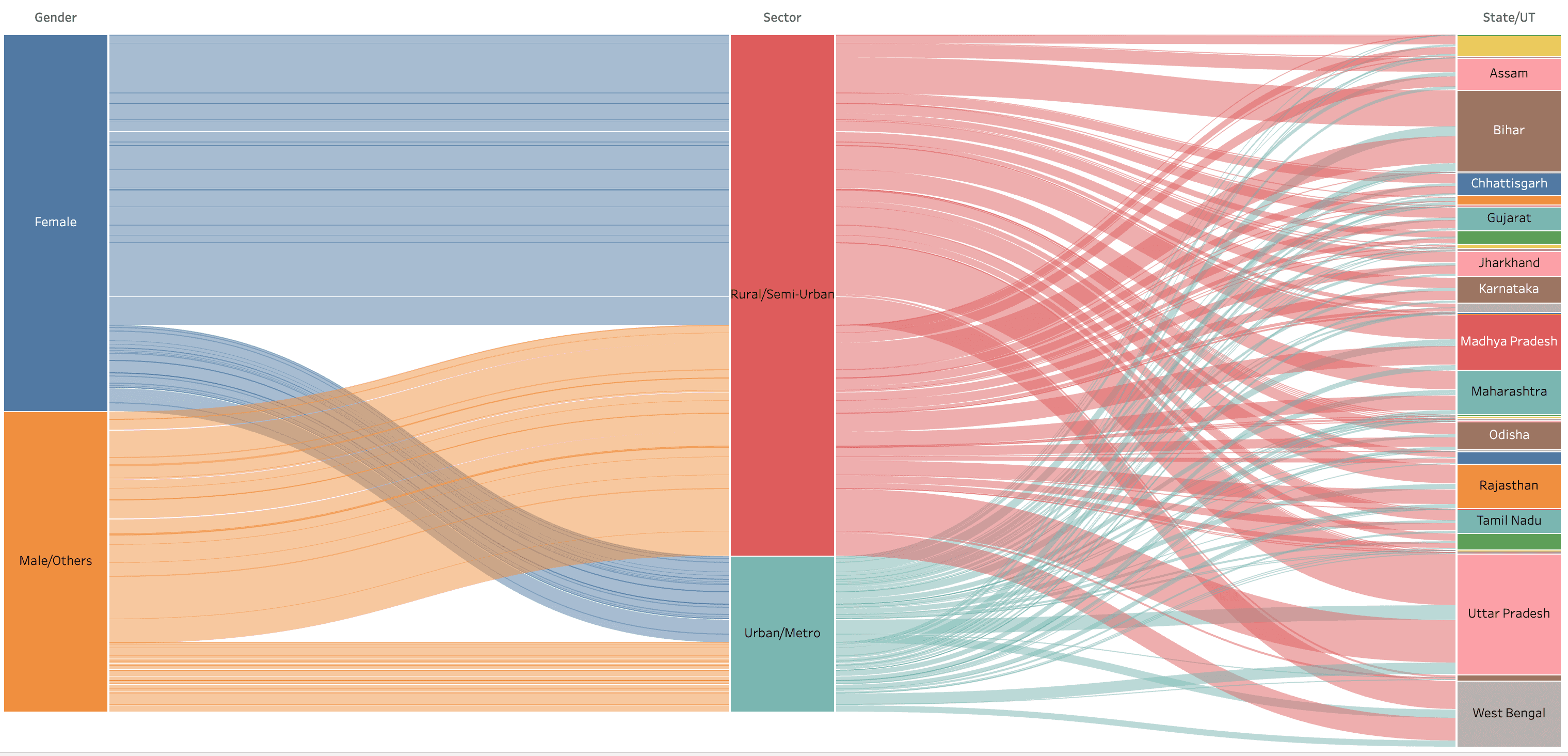
Female Vs Male Deposit volume wrt each state in india
Source PMJDY Data visualized on Tableau


Deposit volume By Gender -> Sector -> State
This Visualization clearly shows us that Females have slightly higher net deposit volume, Rural/Sub Urban has the significantly higher net deposit volume
Source PMJDY Data visualized on Tableau
Digital Adoption is significantly less in Rural/Semi urban compared to Urban although It constitutes more than 70% net deposit volume of the entire country
Deposit volume By Gender -> Sector -> Year


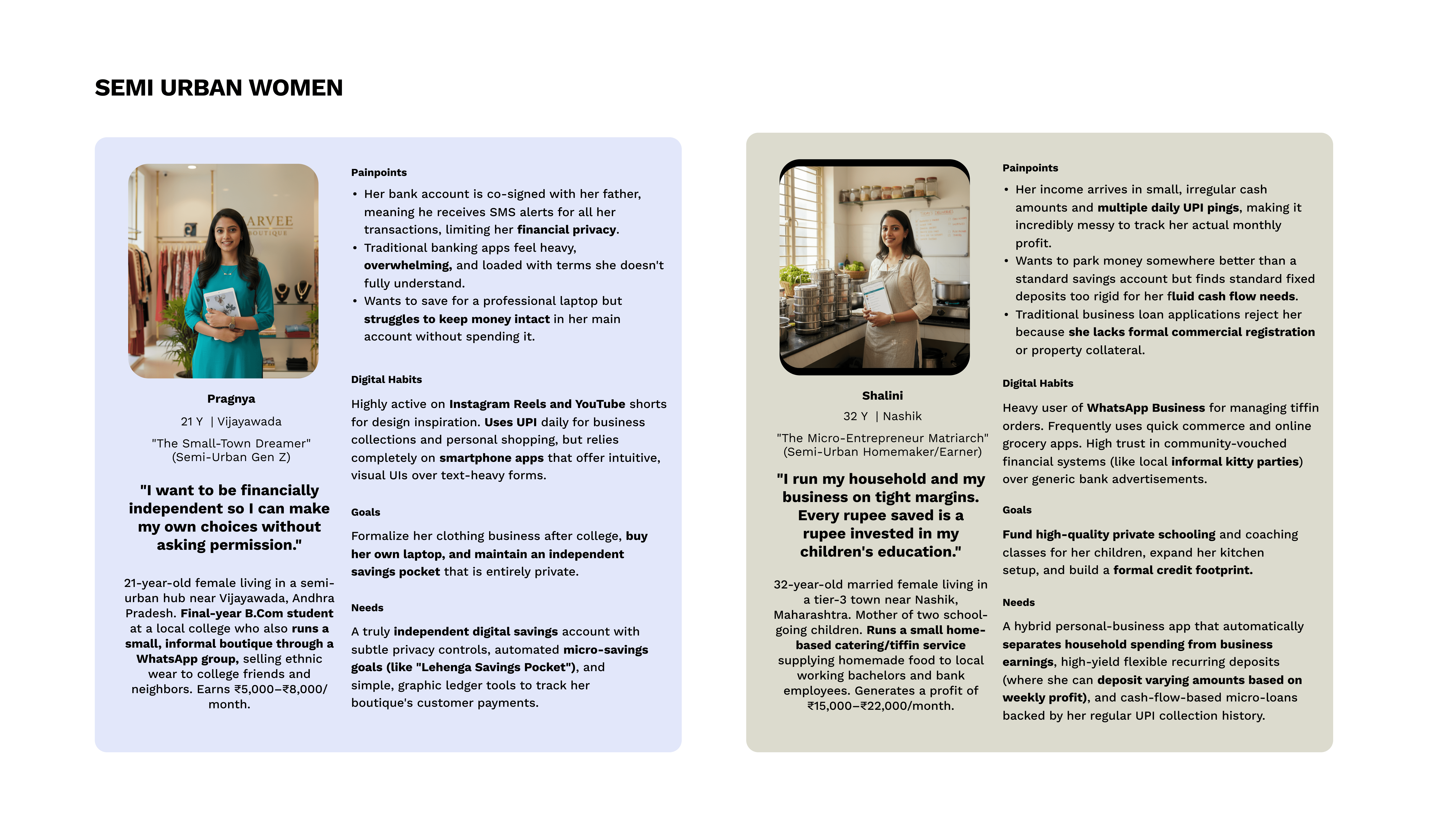
Rural & Semi urban sectors are backbone for Indian economy constituting nearly 68% population but digital adoption of banking services is significantly low at 15-20% compared to Urban population at 65-70%. Women in India recorded higher net deposit volume compared to men across sectors but when it comes total number of credit accounts, women are at 26% compared to men at 74% although women have higher average credit scores across all age groups. This data clearly shows that there is a huge scope of customer acquisition for banking companies if digital adoption & engagement increases in rural regions. This can only be achieved by designing solutions specific to their needs. Reimagining digital banking into agent driven experience in Local language, Voice first UI, Reducing the complexity, making banking interactions more secure can greatly influence Customer acquisition and retention at scale.
Redefined Problem Statement
Design a conversational, voice first mobile banking app which helps rural and semi urban women within age group 18-40 to manage their banking needs. The app should focus on basic needs and avoid complex banking jargons, It should have enhanced security that builds trust and increases digital adoption and customer engagement of banking services in rural regions, especially women
Solution - SBI-Sakhi
Bridging Gaps, Empowering Dreams

Voice first native language mobile banking app targeted for Rural / semi urban Indian women.
Easy to use light weight banking experience without complex jargons, designed for low data consumption focusing on basic banking needs
Agentic flow for sending money, opening loan account, creating micro saving goals with additional biometric security
Agent Driven Loan Taking

Traditional loan apps pull bank records to calculate a credit score and check eligibility. We are introducing an AI chat layer on top of this data. By conversing directly with applicants, the AI evaluates their actual need and intent. This conversational context provides deeper, real-world insights, significantly sharpening the accuracy of the final underwriting decision for banks.
Goal Driven Micro Savings

Goal-based micro-segregation layer built directly onto existing bank accounts. Designed especially for women, it lets users split their balance into separate savings pools to track individual progress. To build trust and prevent impulsive spending, opening a pool or withdrawing funds requires mandatory biometric authentication, adding a secure roadblock against unauthorized fund movement.
Money Transfers that builds Trust

Compared to traditional UPI apps, we propose to add biometric authentication as an extra layer of defense, specifically protecting women whose phones are frequently shared among family members. Additionally, once biometrics clear, a strict 10-second countdown begins. This critical delay allows users a final window to cancel the transaction, providing a crucial safety net to reconsider or halt forced transfers.